Which should you choose for your landscaping project?
When it comes to outdoor timber, treated C24 timber has long been the industry standard. It’s strong, readily available and pressure treated to help protect it from decay and insect attack.
But there is another option.
Thermowood® takes a completely different approach to improving timber performance — using heat and steam rather than chemical preservatives.
So, what are the real differences between Thermowood and treated C24 timber, and which is the better choice for your project?
What is treated C24 timber?
C24 is a strength grade, commonly used for structural softwood such as posts, joists and rafters. The C24 grading tells you about the timber’s structural strength and performance.
The timber is then usually pressure treated with preservative chemicals to improve its resistance to rot, decay and insects when used outdoors.
It is a tried-and-tested solution and remains widely used across landscaping and construction.
What is Thermowood?
Thermowood is timber that has been thermally modified using controlled heat and steam.
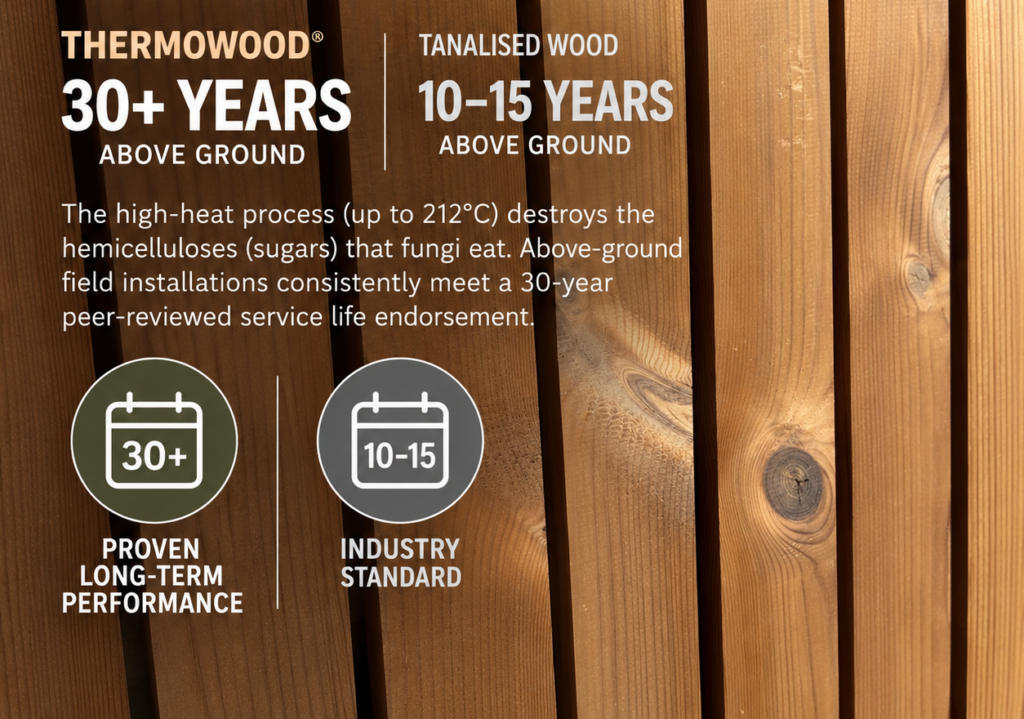
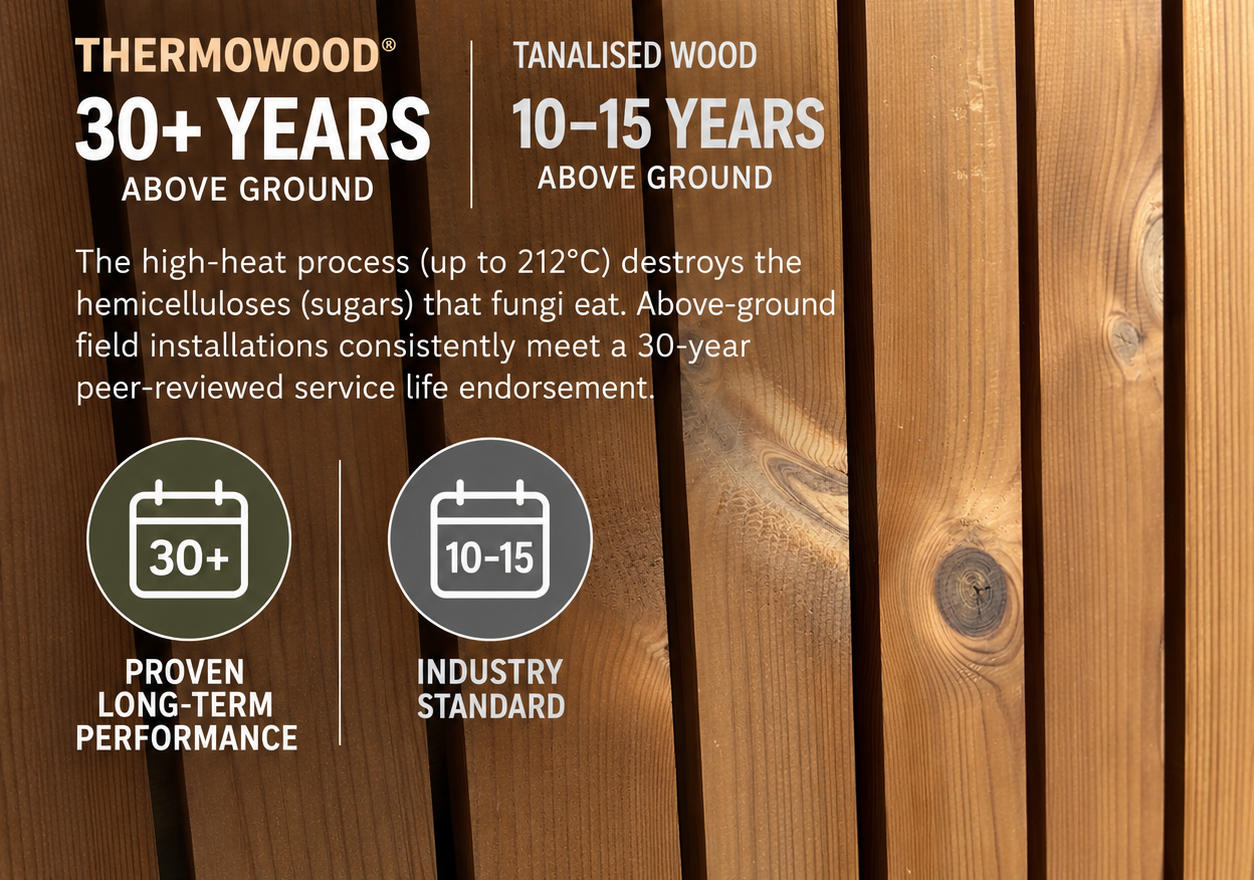
The process changes the structure of the timber, reducing its ability to absorb moisture and improving its dimensional stability and resistance to decay.
Importantly, the modification process does not rely on chemical preservatives.
The result is a timber with a distinctive warm appearance, reduced moisture movement and a natural, durable character that works particularly well in gardens and outdoor spaces.
So, what are the benefits of Thermowood?
1. No chemical preservatives
One of the biggest differences is how the two timbers are protected.
Treated timber relies on preservative chemicals being introduced into the wood. Thermowood achieves improved durability through the thermal modification process itself.
For customers looking for a more natural material for their garden, this can be an important consideration.
2. Improved dimensional stability
Thermowood has significantly reduced moisture absorption compared with untreated timber.
That means less movement, swelling and shrinking as the timber responds to changes in moisture and weather.
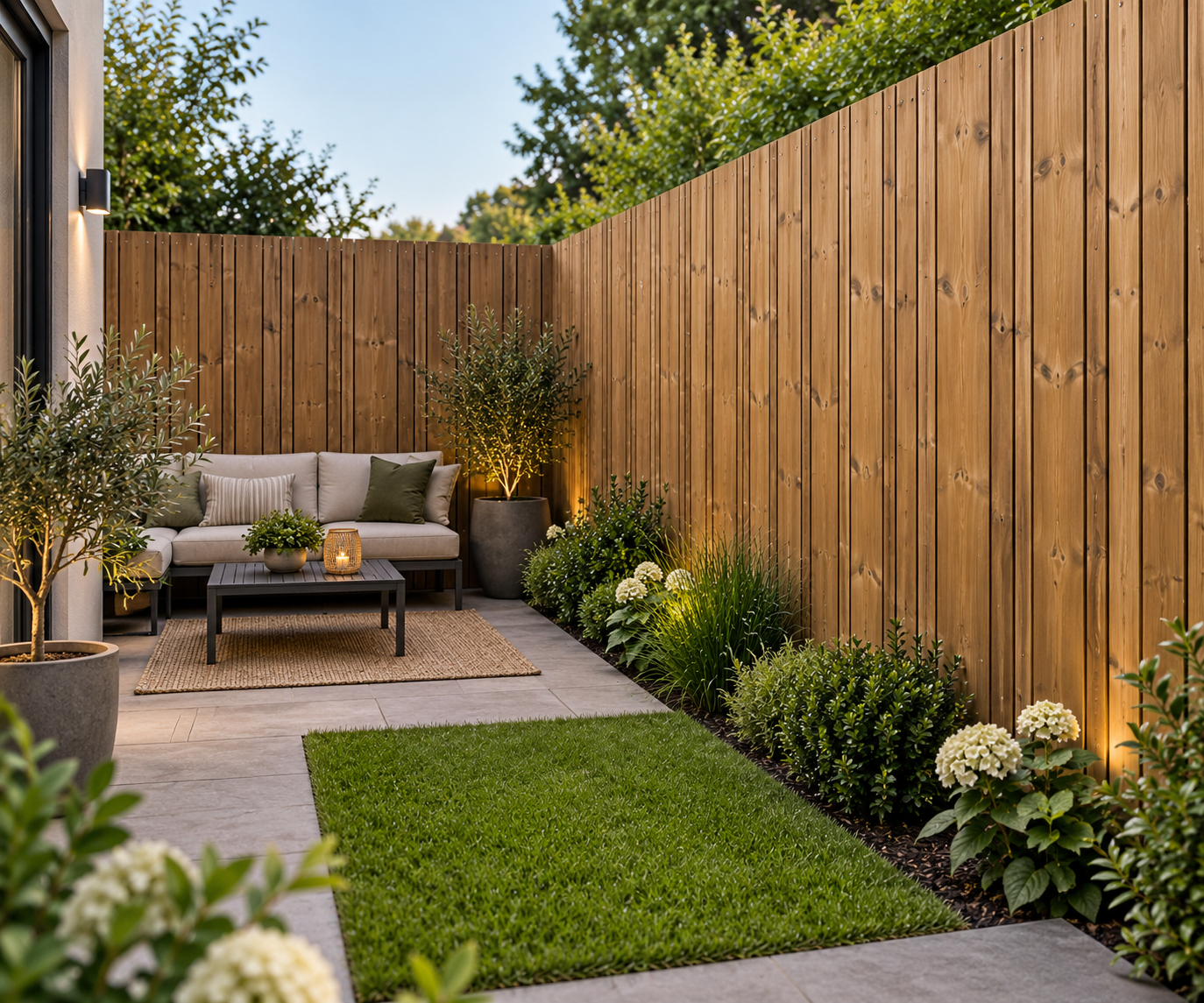
For applications such as fencing, screening and slatted panels, this can help maintain a more consistent appearance over time.
3. Naturally durable
Thermal modification improves the timber’s resistance to decay and biological deterioration.
Rather than relying solely on a preservative treatment, Thermowood’s performance comes from changing the properties of the timber itself.
4. A beautiful natural finish
There is also a very obvious visual difference.
Thermowood has a rich, warm brown appearance with a distinctive grain. Left untreated, it will gradually weather naturally to an attractive silver-grey as it is exposed to sunlight and the elements.
Treated softwood, by comparison, typically has a green or brown appearance from the preservative treatment.
For contemporary gardens, architectural landscaping and high-end fencing, the natural appearance of Thermowood can be a real advantage.
5. A more considered material choice
Thermowood offers an alternative for people who want to reduce their reliance on chemically treated timber.
The timber is modified using heat and steam, with no chemical preservatives added during the thermal modification process.
Combined with responsibly sourced timber, it provides a natural alternative for outdoor projects where appearance, stability and material choice all matter.
Is Thermowood stronger than C24?
This is an important distinction.
C24 is a structural strength classification, whereas Thermowood describes a method of modifying timber.
They therefore aren’t directly comparable in terms of strength.
Thermowood can be an excellent choice for fencing, screening, cladding and other applications where dimensional stability, durability and appearance are important. Where a project requires a specific structural strength classification, the timber should be specified and graded appropriately for that application.
Which should you choose?
For many standard landscaping projects, treated C24 timber remains a practical and cost-effective option.
But if you’re looking for something that offers natural durability, excellent dimensional stability, a premium appearance and no chemical preservative treatment, Thermowood is a compelling alternative.
At Taiga Fencing, we use Thermowood to create premium fence panels, screening and garden products designed to look as good as they perform.
Different timber. Different approach. A more natural way to build.