Thermowood Fencing vs Composite Fencing: Which Is the Better Choice?
When choosing fencing for a garden, commercial landscape, or architectural project, durability and appearance are often the first considerations. Today, however, homeowners, designers, and contractors are increasingly looking beyond aesthetics to evaluate sustainability, lifecycle performance, and long-term value.
For many projects, the decision comes down to two modern materials: Thermowood and wood-plastic composite (WPC) fencing.
While both are designed to withstand outdoor conditions, they are fundamentally different materials with distinct characteristics. Understanding these differences can help you choose the right fencing solution.
What Is Thermowood?
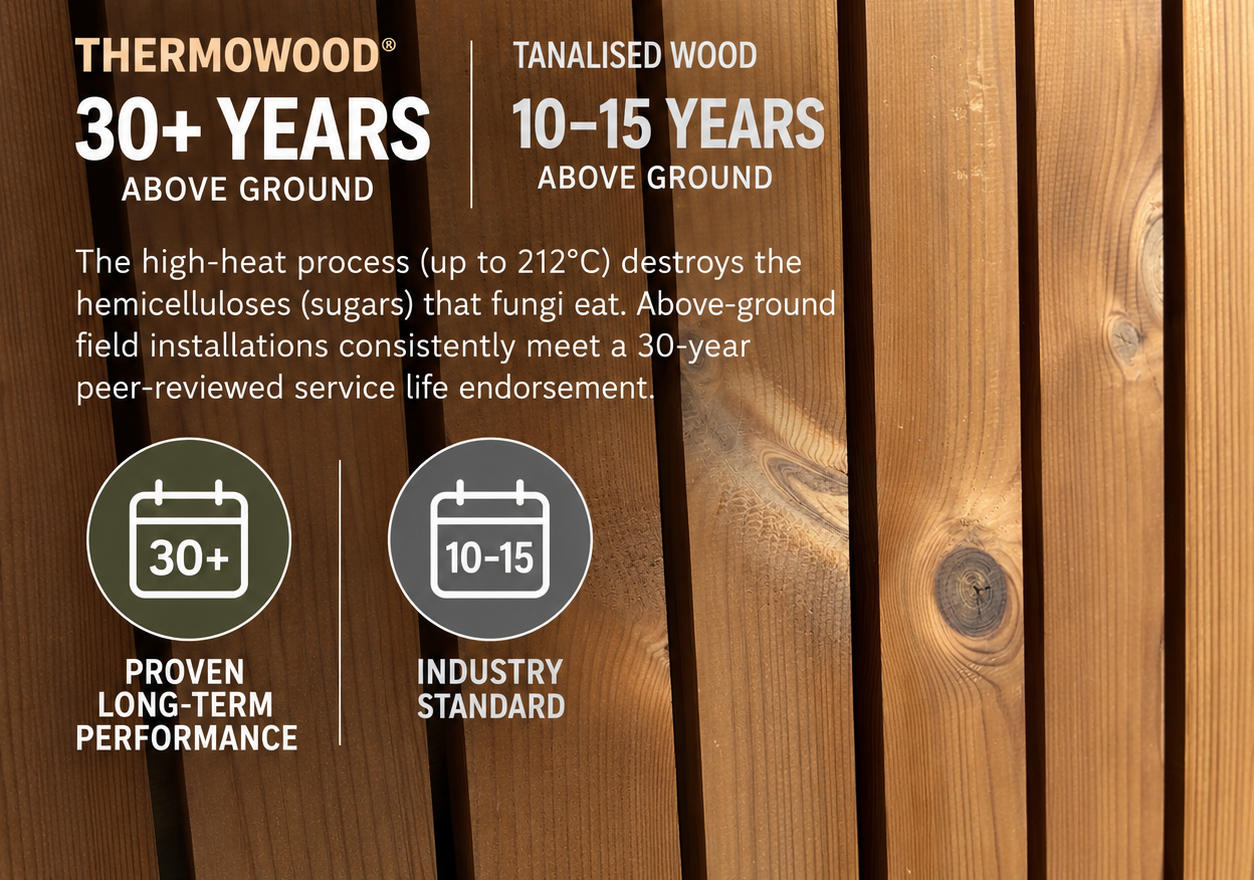
Thermowood is natural timber enhanced using only heat and steam. At Taiga Fencing, our Thermowood fence panels are made from sustainably sourced Nordic pine and spruce.
The thermal modification process permanently alters the wood’s cell structure, improving durability and stability without chemical preservatives.
Key benefits include:
- Excellent dimensional stability
- Enhanced resistance to decay (Durability Class 2)
- Reduced moisture absorption
- Service life tested up to 30 years (BRE)
- Rich brown colour throughout
- Chemical-free composition
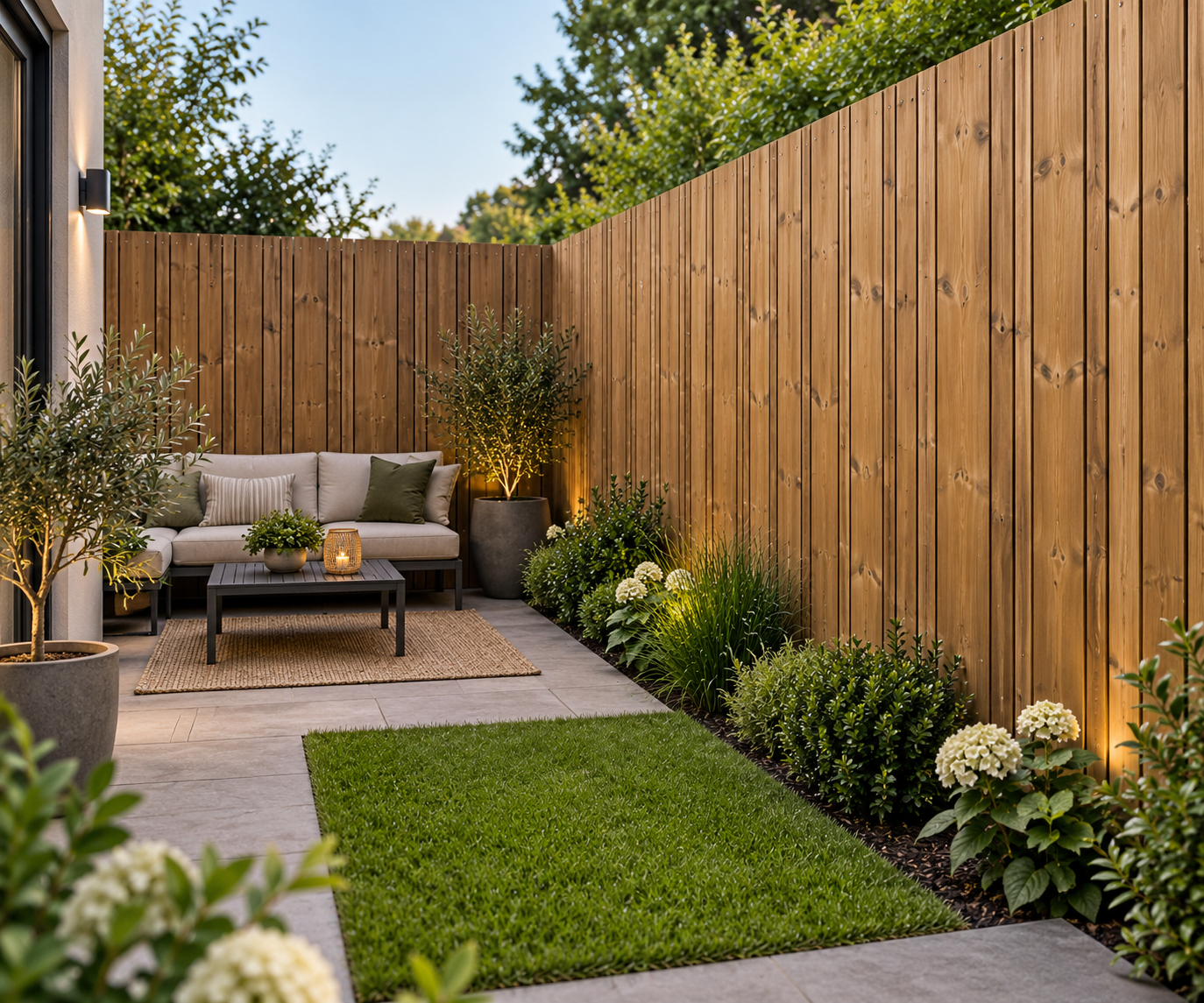
Thermowood retains the natural grain and character of real wood, creating a warm, timeless appearance.
What Is Composite Fencing?
Composite fencing is made from a blend of:
- Wood fibres
- Plastic polymers (typically PE, PP, or PVC)
- Additives and bonding agents
It is designed to resist rot and require minimal maintenance.
Unlike timber, composite fencing has a uniform colour and texture. While some homeowners prefer this consistency, it lacks the natural variation of real wood.
Dimensional Stability and Movement
A key difference between the two materials is how they respond to changing conditions.
Thermowood
Thermal modification greatly reduces timber movement, resulting in excellent dimensional stability.
Composite
Composite expands and contracts with temperature changes, requiring expansion gaps and careful installation.
For projects where precision and long-term stability matter, material movement is an important consideration.
Resistance to Rot and Decay
Both materials are suitable for outdoor use but achieve durability differently.
Thermowood
- Durability Class 2 (Durable)
- Enhanced resistance through thermal modification
- Suitable for above-ground exterior applications
Composite
- Typically Durability Class 1 (Very Durable)
- Resistance largely comes from its plastic content
Both can provide long service lives when properly installed.
Structural Performance and Weight
Thermowood
Thermowood is lightweight and easy to work with.
Benefits include:
- Faster installation
- Reduced labour effort
- Compatibility with standard woodworking tools
Composite
Composite fencing is generally heavier and may have lower bending strength than solid timber, depending on its formulation.
Support spacing and installation requirements should be carefully considered.
Sustainability and Environmental Impact
Raw Materials
Thermowood
- Renewable Nordic softwood
- PEFC-certified timber
- FSC® options available
Composite
- Blend of wood fibres and plastic
- Often sourced from global supply chains
Manufacturing
Thermowood
- Modified using heat and steam only
- No chemical preservatives
Composite
- More energy-intensive production
- Relies on plastic manufacturing
End of Life
Thermowood
- Reusable
- Biomass recyclable
- Biodegradable
Composite
- Limited recycling options
- Not biodegradable
For environmentally conscious projects, Thermowood offers clear sustainability advantages.
Maintenance Requirements
Both materials are low-maintenance compared to traditional treated timber.
Thermowood
Requires minimal upkeep. Left untreated, it naturally weathers to a silver-grey patina while maintaining structural integrity.
Composite
Typically requires only occasional cleaning.
Thermowood also offers the option of preserving its brown colour with oil treatments or allowing it to age naturally.
The Natural Look and Feel
Appearance remains a major factor for many homeowners and designers.
Thermowood offers:
- Genuine wood grain
- Natural character and variation
- Warm tactile qualities
- Premium architectural appeal
Composite fencing offers:
- Consistent colour and texture
- Uniform appearance
- Modern manufactured finish
For projects seeking a natural aesthetic, Thermowood provides a look that synthetic materials cannot fully replicate.
Why More Homeowners Are Choosing Thermowood
Choosing between Thermowood and composite fencing means balancing performance, appearance, sustainability, and value.
Thermowood is increasingly specified for projects that require:
- Natural timber aesthetics
- Excellent dimensional stability
- Long service life
- Certified sustainable materials
- Chemical-free composition
- Lower environmental impact
- Comfortable surface temperatures
- Premium architectural quality
Fencing does more than define a boundary—it shapes the look and feel of an outdoor space for years to come.
For those seeking a sustainable, natural, and high-performance fencing solution, Thermowood offers a compelling alternative to composite materials.